 Sign Up for Our Newsletter

If you’ve ever been deep in the woods trying to light a campfire with damp wood or realizing your compass doesn’t make sense — welcome to real camping! It’s thrilling, unpredictable, and deeply rewarding. But it’s also a test of preparation. According to a 2024 KOA report, more than 58 million U.S. households camped at least once last year, and that number keeps growing.
With so many new campers hitting the trails, learning essential outdoor skills has never been more important. These skills not only make your trips smoother — they could save your life in unexpected situations. In this guide, we’ll walk you through the 10 essential outdoor skills every camper should know in 2025, from fire-starting to weather awareness, to help you feel confident and capable on your next adventure.
🔥 1. Fire-Starting and Fire Safety
Fire is the heart of any campsite — it provides warmth, cooks food, and creates that cozy atmosphere we all love.
Here’s what you should know:
- Master different fire-starting methods: Learn how to use lighters, waterproof matches, ferro rods, and even friction-based techniques like the bow drill.
- Understand fire safety: Always clear a 10-foot radius of dry debris before lighting a fire. Never leave it unattended.
- Adapt to weather: In wet or windy conditions, carry dry tinder (cotton balls, dryer lint, or wax fire starters).
- Respect regulations: Always check local fire restrictions — one mistake can cause a wildfire.
Pro Tip: Practice starting a fire with minimal tools before your trip. The first time you try shouldn’t be in a downpour!
⛺ 2. Shelter Building and Camp Setup
A proper shelter is your protection against the elements — rain, wind, and bugs.
To get it right:
- Choose your campsite wisely: Look for flat, elevated ground away from water sources. Avoid dead trees or low spots that can flood.
- Set up efficiently: Practice pitching your tent at home before your trip. It’s no fun learning in the dark!
- Weatherproof it: Use a tarp or footprint under your tent for added insulation and moisture control.
- For survival scenarios: Learn how to build natural shelters using branches, leaves, and rope — a key bushcraft skill.
A solid shelter means better sleep and a much happier camping experience.
💧 3. Water Purification and Hydration
You can survive for weeks without food — but only days without water.
Key hydration and purification tips:
- Find safe sources: Flowing streams or springs are usually safer than stagnant water.
- Always purify: Boil for at least 1 minute, or use filters, iodine tablets, or UV purifiers.
- Pack backups: Bring both a water bottle and a collapsible hydration bladder.
- Monitor intake: Drink small amounts frequently to prevent dehydration, especially in hot weather.
Pro Tip: Even crystal-clear mountain water can contain bacteria. Always purify before you drink!
🍳 4. Outdoor Cooking and Food Storage
Good food keeps energy (and morale) high. But cooking outdoors requires planning.
Here’s how to handle it:
- Choose simple, lightweight meals: Think instant oats, dried fruit, and freeze-dried dinners.
- Use the right gear: A portable stove, lightweight cookware, and utensils are must-haves.
- Avoid wildlife encounters: Store food in sealed containers or bear-proof canisters away from your tent.
- Try campfire cooking: Practice grilling, foil packet meals, and skillet dishes for variety.
Cooking outside is one of the joys of camping — just keep it safe and organized.
🧭 5. Navigation and Map Reading
Technology fails. Batteries die. That’s why every camper should know how to navigate the old-fashioned way.
Get your bearings with these skills:
- Learn to read topographic maps: Understand contour lines, elevations, and terrain features.
- Use a compass: Practice orienting your map and finding your direction of travel.
- Combine tech + instinct: GPS devices are great — but always have a backup plan.
- Use natural navigation: The sun rises in the east and sets in the west; moss tends to grow on the north side of trees in the Northern Hemisphere.
Pro Tip: Before every trip, plan your route and share it with a friend in case of emergencies.
🩹 6. First Aid and Emergency Preparedness
Even a small cut can turn serious if not treated properly outdoors.
Be ready with these essentials:
- Build a comprehensive first aid kit: Include bandages, antiseptic wipes, tweezers, and pain relievers.
- Learn basic first aid: Know how to treat burns, blisters, sprains, and bites.
- Plan for emergencies: Understand how to signal for help using a whistle, mirror, or personal locator beacon (PLB).
- Stay calm: In stressful situations, clarity and confidence matter more than speed.
Knowledge and preparation can make the difference between a close call and a crisis.
🐾 7. Wildlife Awareness and Safety
The outdoors is their home — you’re the visitor.
Be wildlife-smart by:
- Learning about local species: Know what animals live in your camping area and how to behave around them.
- Storing food securely: Use bear boxes or hang food 10 feet off the ground and 4 feet from tree trunks.
- Keeping distance: Never feed or approach wildlife — even if they look harmless.
- Knowing emergency responses: Learn what to do during bear or snake encounters.
Respect nature, and it will respect you back.
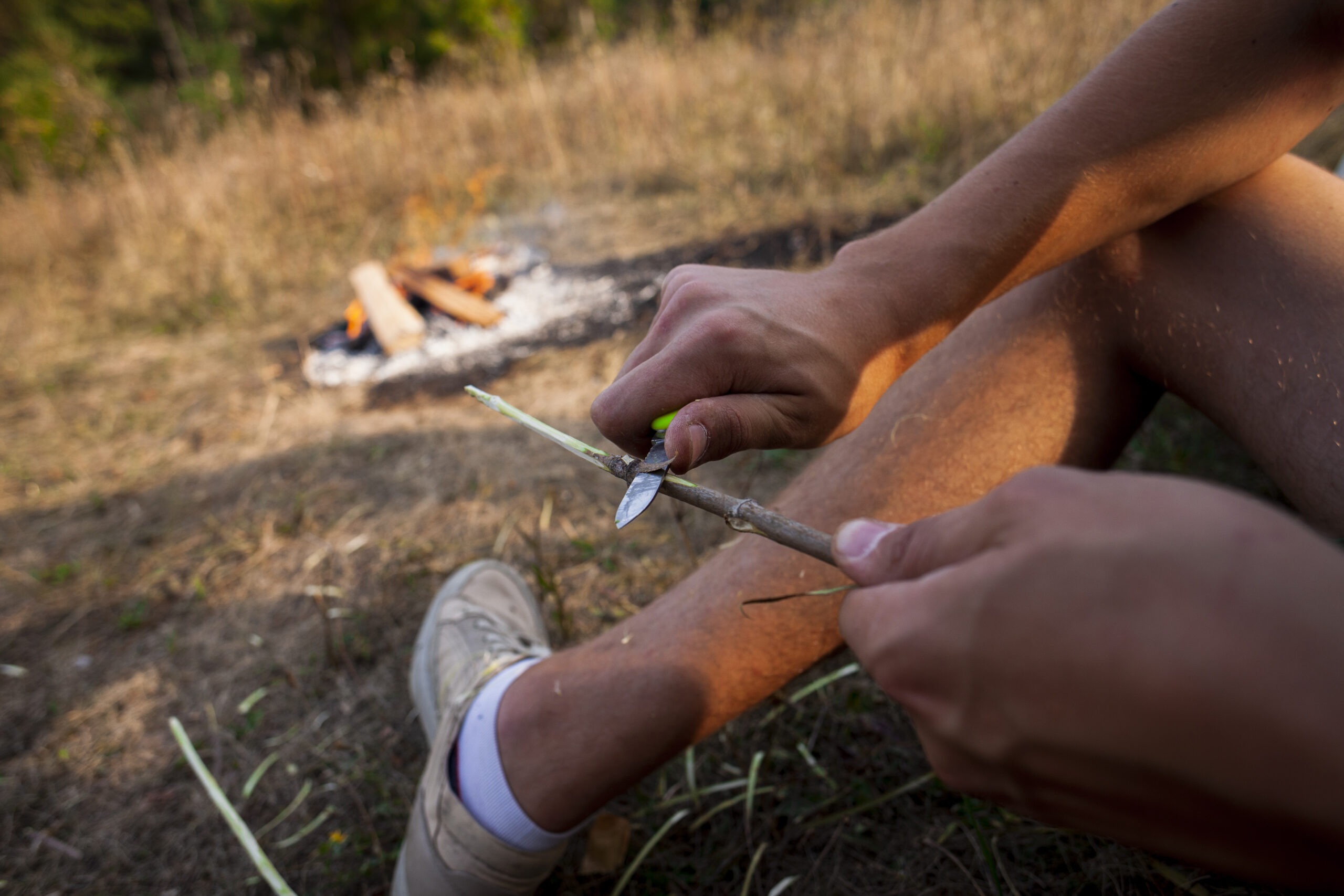
🔪 8. Knife Handling and Bushcraft Basics
A reliable knife or multi-tool is your best friend outdoors.
Learn to use it safely:
- Choose wisely: Opt for a sturdy, sharp, full-tang knife.
- Handle with care: Always cut away from your body and keep your blade clean and dry.
- Practice bushcraft: Carve stakes, prepare kindling, and craft simple tools.
- Maintenance matters: Sharpen regularly and store safely in a sheath.
Bushcraft builds self-reliance — and connects you to the roots of outdoor living.
🌿 9. Leave No Trace and Environmental Stewardship
The wilderness deserves our respect. Every camper should live by the Leave No Trace principles.
Here’s how to camp responsibly:
- Pack it in, pack it out: Leave your campsite cleaner than you found it.
- Dispose of waste properly: Bury human waste 6–8 inches deep and 200 feet from water.
- Stay on trails: Avoid damaging vegetation or fragile soil.
- Be mindful of noise and light: Preserve nature’s peace for others.
Caring for the outdoors ensures it stays wild and beautiful for generations to come.
🌤️ 10. Weather Awareness and Survival Instincts
Weather can change in a heartbeat — and nature doesn’t text warnings.
Here’s how to stay one step ahead:
- Check forecasts: Always review weather reports before your trip.
- Read the sky: Dark clouds, sudden temperature drops, and shifting winds often signal storms.
- Pack for flexibility: Layered clothing, rain gear, and thermal blankets are essentials.
- Trust your instincts: If something feels off, it probably is. Move to safety early.
Preparation isn’t paranoia — it’s confidence in action.
🌲 Conclusion
Camping is more than a weekend escape — it’s an opportunity to reconnect with nature, test your limits, and find peace in simplicity. These 10 essential outdoor skills are the foundation of a confident, capable camper.
From starting your first fire to navigating by the stars, every skill builds resilience and respect for the wild. So, before your next trip, challenge yourself to learn something new. Pack smart, stay aware, and enjoy the freedom that comes from knowing — you’ve got this.
Adventure is calling — and now, you’re ready to answer.

