 Sign Up for Our Newsletter

Published: February 5, 2026
Last Updated: February 5, 2026
Author: Alston Hanley
IT operations professional with over 15 years of experience and a lifelong tech enthusiast. Based in the Caribbean, the Founder of MyCaribbTech.com, CaribbTech Dynamics Online (CTDO), writes about AI, Technology, Business, Outdoor gear, and Fitness lifestyle tools, sharing practical, real-world insights through his blog launched in 2023.
Key Takeaways
- Outdoor hobbies improve cardiovascular health, muscular strength, and long-term exercise adherence.
- Hiking, cycling, swimming, and trail running are among the most effective full-body outdoor workouts in 2026.
- Low-impact activities such as swimming and yoga support joint health and injury prevention.
- Team sports and adventure sports enhance motivation through social accountability.
- Community-based fitness groups play a major role in sustaining active lifestyles in Caribbean regions.
Introduction
Outdoor physical activity has become a primary fitness strategy in 2026 due to its proven benefits for physical health, mental resilience, and behavioral consistency. Across Caribbean territories, access to beaches, hills, coastal roads, and forest trails provides natural environments that support year-round outdoor movement.
Behavioral health research indicates that individuals who exercise in natural environments maintain their routines at higher rates than indoor exercisers, largely due to increased enjoyment and environmental engagement.
Natural settings stimulate dopamine and serotonin pathways associated with motivation, reduce cortisol-related stress responses, and improve cardiovascular efficiency through sustained aerobic movement.
This guide presents the top 10 outdoor hobbies that keep you fit in 2026, explaining how each activity supports strength development, endurance, metabolic health, and emotional well-being.
Why Outdoor Hobbies Improve Fitness and Health
Outdoor exercise offers measurable advantages over indoor training environments.
Sunlight stimulates vitamin D synthesis in the skin, which regulates calcium absorption, strengthens bone density, and supports immune system function. Exposure to green spaces reduces sympathetic nervous system activity, lowering stress hormones and improving emotional regulation.
For Caribbean residents, consistent sunlight, coastal breezes, and varied terrain create ideal conditions for sustainable outdoor fitness.
Compared to indoor workouts, outdoor hobbies provide the following evidence-based benefits:
- Improved mental health through reduced cortisol levels
- Higher exercise adherence due to environmental stimulation
- Increased enjoyment from multisensory engagement
- Enhanced mind-body coordination via uneven terrain and varied movement patterns
1. Hiking – Full-Body Aerobic and Strength Training
Hiking is a moderate-to-high intensity aerobic activity that involves walking on natural terrain to improve cardiovascular endurance, muscular strength, and balance.
Island trails, rainforest paths, and coastal hills provide natural resistance training environments.
Key Benefits of Hiking
- Improved heart health through sustained aerobic exertion
- Increased lower-body strength in the quadriceps, glutes, and calves
- Enhanced cognitive clarity through increased cerebral oxygenation
- Reduced anxiety through exposure to natural landscapes
2. Cycling – Cardiovascular Endurance and Fat Metabolism
Cycling is a sustained aerobic exercise that strengthens the lower body while improving cardiovascular efficiency and metabolic function.
Coastal highways and rural roads across the Caribbean support recreational and endurance cycling.
Key Benefits of Cycling
- Increased cardiovascular capacity
- Reduced joint stress compared to running
- High caloric expenditure
- Improved postural balance
3. Swimming – Low-Impact Total-Body Conditioning
Swimming is a non-weight-bearing, full-body workout that engages nearly all major muscle groups while minimizing joint compression.
Natural beaches, lagoons, and community pools support year-round aquatic fitness.
Key Benefits of Swimming
- Improved muscular tone and symmetry
- Enhanced respiratory efficiency
- Weight management support
- Increased joint mobility
4. Running and Jogging – High-Efficiency Cardiovascular Training
Running is a high-impact aerobic activity that strengthens the cardiovascular system, improves bone density, and enhances metabolic rate.
Boardwalks, beach paths, and hillside roads provide varied running environments.
Key Benefits of Running
- Increased stroke volume and heart efficiency
- Strengthened lower-limb musculature
- Enhanced aerobic endurance
- Improved psychological resilience
5. Rock Climbing – Muscular Strength and Cognitive Development
Rock climbing combines resistance training with complex motor planning.
Natural cliff faces and climbing gyms across the region support skill development.
Key Benefits
- Increased muscular endurance
- Improved neuromuscular coordination
- Heightened concentration ability
- Enhanced self-efficacy
6. Kayaking and Canoeing – Upper Body and Core Stability Training
Kayaking and canoeing emphasize rotational core strength and upper-body conditioning.
Mangroves, bays, and rivers create ideal paddling environments.
Key Benefits
- Increased trunk stability
- Improved spinal alignment
- Reduced psychological stress
- Enhanced environmental engagement
7. Surfing – Dynamic Balance and Endurance Development
Surfing integrates balance, power generation, and aerobic endurance.
Select Caribbean coastlines provide consistent surf conditions.
Key Benefits
- Improved postural control
- Increased muscular endurance
- Enhanced reaction speed
- Strengthened mental resilience
8. Outdoor Yoga and Pilates – Flexibility and Neuromuscular Control
Outdoor yoga and Pilates support mobility, postural alignment, and nervous system regulation.
Beachfront and park sessions enhance relaxation responses.
Key Benefits
- Improved joint range of motion
- Reduced chronic stress
- Enhanced posture
- Increased body awareness
9. Team Sports – Socially Reinforced Physical Conditioning
Team sports enhance fitness through structured competition and cooperation.
Football, cricket, volleyball, and basketball are widely practiced throughout Caribbean communities.
Key Benefits
- Elevated caloric expenditure
- Increased adherence through social accountability
- Improved coordination
- Enhanced motivation
10. Trail Running – Advanced Endurance and Agility Training
Trail running involves running on natural terrain with elevation changes and technical obstacles.
Volcanic hills, coastal ridges, and forest reserves offer challenging routes.
Key Benefits
- Enhanced balance and agility
- Increased leg strength
- Improved oxygen utilization
- Heightened mental focus
Real-World Example: Trail Running with the St. Kitts Hash House Harriers
Personal experience reinforces the practical value of outdoor fitness.
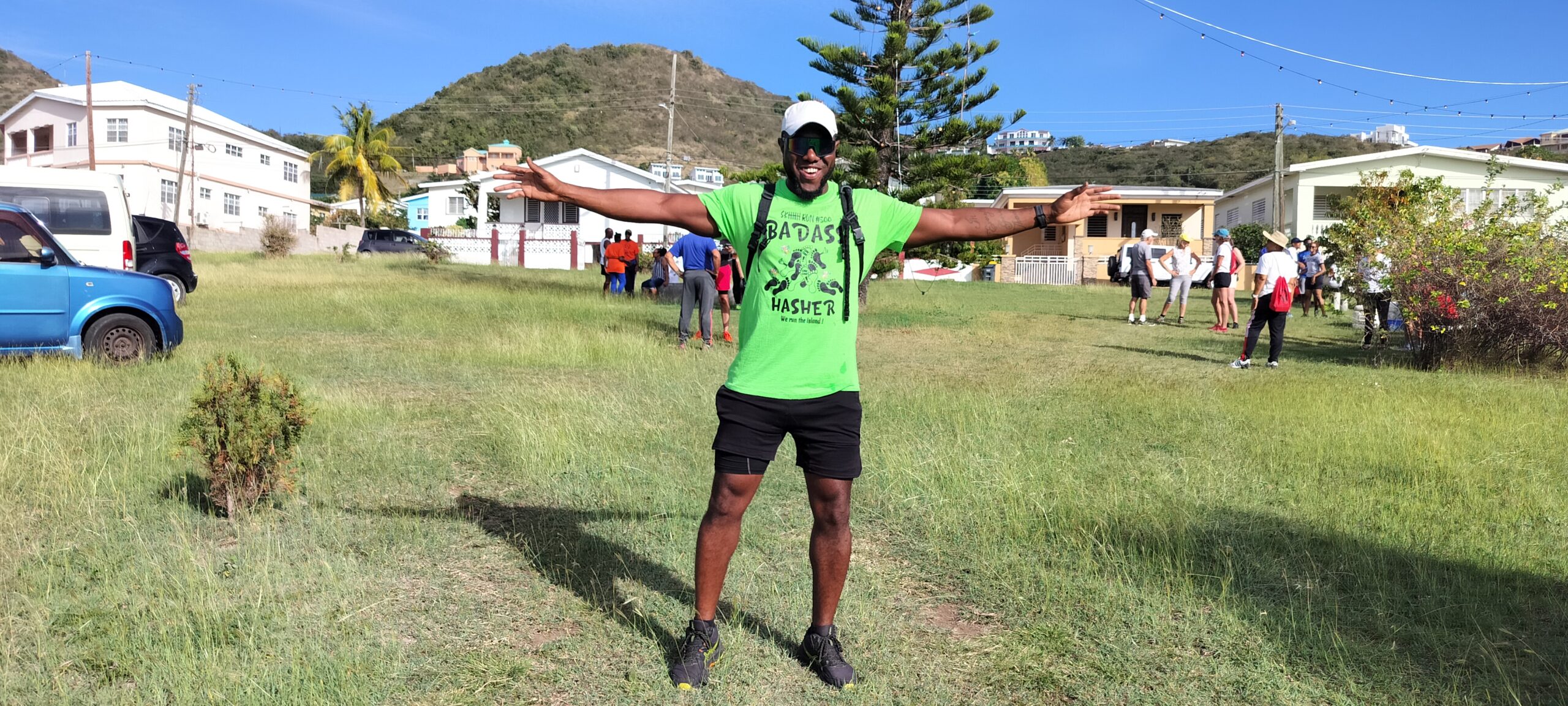
on January 31st 2026, I participated in my third organized trail run with the St. Kitts Hash House Harriers during their #511 event, which began in Bird Rock, St. Kitts. The route extended across hillside terrain, offering panoramic coastal views while presenting sustained uphill climbing challenges.
The elevation changes required continuous cardiovascular output and lower-body engagement. During the climbs, increased respiratory demand reflected the aerobic intensity of trail running in natural environments.
I completed the course in approximately 43 minutes, representing a measurable improvement in endurance compared to previous participation.
My initiation with the group occurred in 2025 with HASH #495 on St. Patrick’s Day. Although I only completed two runs that year, both experiences highlighted the importance of community-supported fitness.
In 2026, I committed to increasing my outdoor activity for physical conditioning and mental well-being. This event served as the foundation for renewed consistency.
Community-based organizations such as Hash House Harriers chapters provide structured opportunities for Caribbean residents to engage in sustainable outdoor fitness. Similar groups operate throughout the region and support long-term participation.
The crew took on the trail! Check out our favorite TikTok moments here.
How to Choose the Right Outdoor Hobby
Selecting an appropriate outdoor activity increases sustainability and reduces injury risk.
Consider the following factors:
- Current fitness level and medical history
- Personal interests and motivation patterns
- Time availability
- Equipment and financial resources
- Access to safe outdoor environments
Prioritizing enjoyment and accessibility improves adherence.
Conclusion
Outdoor hobbies represent one of the most effective fitness strategies in 2026 due to their combined physiological, psychological, and behavioral benefits.
Activities such as hiking, cycling, swimming, and trail running improve cardiovascular performance, muscular strength, and emotional well-being. Mind-body practices and team sports further enhance recovery and motivation.
For Caribbean communities, natural landscapes provide unmatched opportunities for year-round physical activity.
By integrating outdoor movement into daily routines and participating in community-based programs, individuals can achieve long-term physical resilience, mental clarity, and improved quality of life.

